ActivityFree · year-round
Snorkel the house reef
Wade off the beach into coral gardens of parrotfish, reef sharks and turtles. The single best free thing to do in the country.
The Maldives runs on one rhythm: a dry season worth the splurge and a wet season worth the discount. Here's when to go, how weather behaves, and what it costs.
Aim for Dec–Apr. Dry NE monsoon — calm seas, bluebird skies, peak diving. Right now it's August, rated avoid. The next good window opens in November.
Wettest stretch, gusty seas.
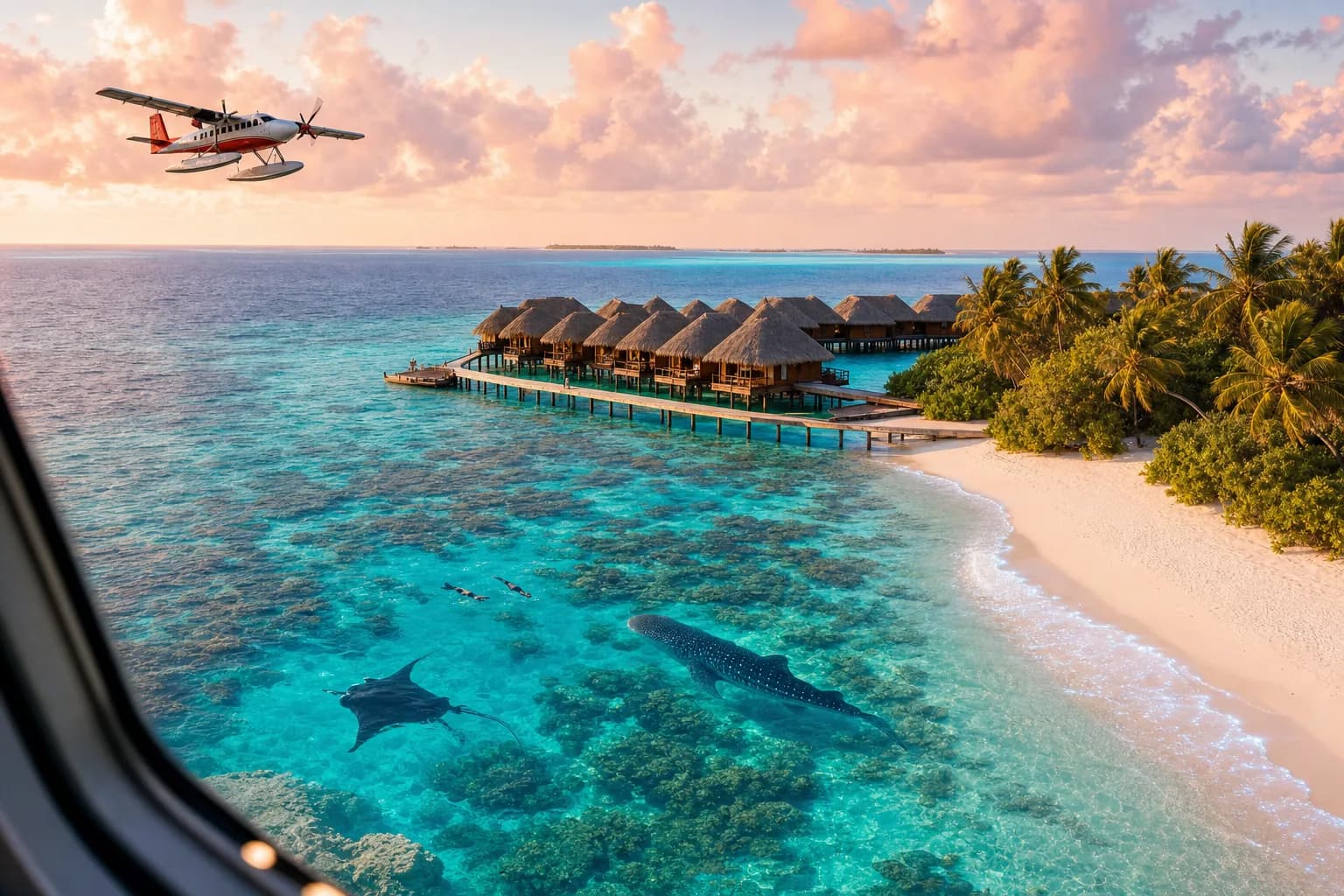
Glass-floor bungalows on stilts over the lagoon — step off your deck straight into the reef. The Maldives basically invented the format.
A plankton-rich channel where hundreds of mantas (and whale sharks) gather to feed. Snorkel-only, ranger-managed, May–November.
One of the densest capitals on earth — gold-domed mosque, brightly painted lanes and a frenetic tuna market worth an afternoon between flights.
The most famous bioluminescent shoreline in the country — bright-blue surf on dark, warm nights.
The flagship guesthouse island: bikini beach, budget dive shops and a real Maldivian village — the Maldives without the resort price tag.
The 16th-century timber palace of the sultan who freed the islands from Portuguese rule — the country's best-preserved historic building.
Equatorial, road-linked islands with WWII relics, a giant manta cleaning station and a totally different, less-touristed feel.
Where points earn their keep. Every major hotel program runs properties here. We pull live award rates so we don't quote stale ones.
We don't publish fixed award rates — they shift with dates and program changes. Check live points pricing before you book.
A honeymoon-grade luxury beach escape, built for switching off. Come for nightlife or city streets and you're on the wrong island.
Most travelers route through a Gulf or South/SE-Asia hub — direct service exists from the Gulf, India and SE Asia. // flight times vary by origin, set your passport below for yours.
Daylight-only and unforgettable — but adds a layover if you land late. Most luxury resorts.
Runs day or night in fair weather; the default for islands within ~50 km of Malé.
Hop to a regional airport, then a short launch. How you reach the far south.
Dirt-cheap, slow and on a set schedule — guesthouse islands like Maafushi only.
A free visa is stamped on arrival for United States passport holders: 30 days, no application, no fee.
File the free online Traveller Declaration (IMUGA) within 96h before your flight.
The Rewardopedia cost index is not published yet for this destination. Polygon coverage and the monthly sample design are still calibrating; a figure appears here only after a published index run includes this city.
The Maldives is less a country you tour than a single resort-island you choose well. Nearly every property sits on its own atoll, reached by seaplane or speedboat, so the calendar — not the map — is what makes or breaks a trip. From December through April the northeast monsoon delivers the postcard: flat water, high visibility for divers, and sun that barely quits. From May the winds flip, the rain rolls in, and prices fall by half. There's no bad island, only a bad week — and that's exactly the kind of fine print we read so you don't have to.
The things people actually ask before booking, answered with real numbers, kept current.
June through September. It's the wet season, so expect rain and wind — but resort rates and room availability are at their best, and the surf is excellent.
No. Maldives issues the same visa to every nationality, United States included: a free 30 days on arrival. You'll need a passport valid for your stay, a confirmed booking, an onward ticket and proof of funds. File the free online Traveller Declaration (IMUGA) within 96h before your flight.
Not necessarily. Wet-season storms tend to pass quickly, water stays warm, and you'll have reefs to yourself. If you only get one shot at the Maldives, aim for the dry season instead.
March and April for visibility and warm water; manta and whale-shark sightings build into the start of the wet season on the western atolls.
Resort islands are one-hotel-per-island and largely all-inclusive; local islands like Maafushi are far cheaper, with guesthouses and designated 'bikini beaches'. Many first-timers split a few nights of each.
Anyone can post a price. We publish a standardized, sourced, dated one. Affiliate commissions never change our editorial inclusion, rankings, or verdicts.
#1 principle
Same basket, every destination.
#2 principle
One source per figure, with a date.
#3 principle
Documented in public for anyone to check.
#4 principle
A commission never changes our editorial inclusion, rankings, or verdicts.